


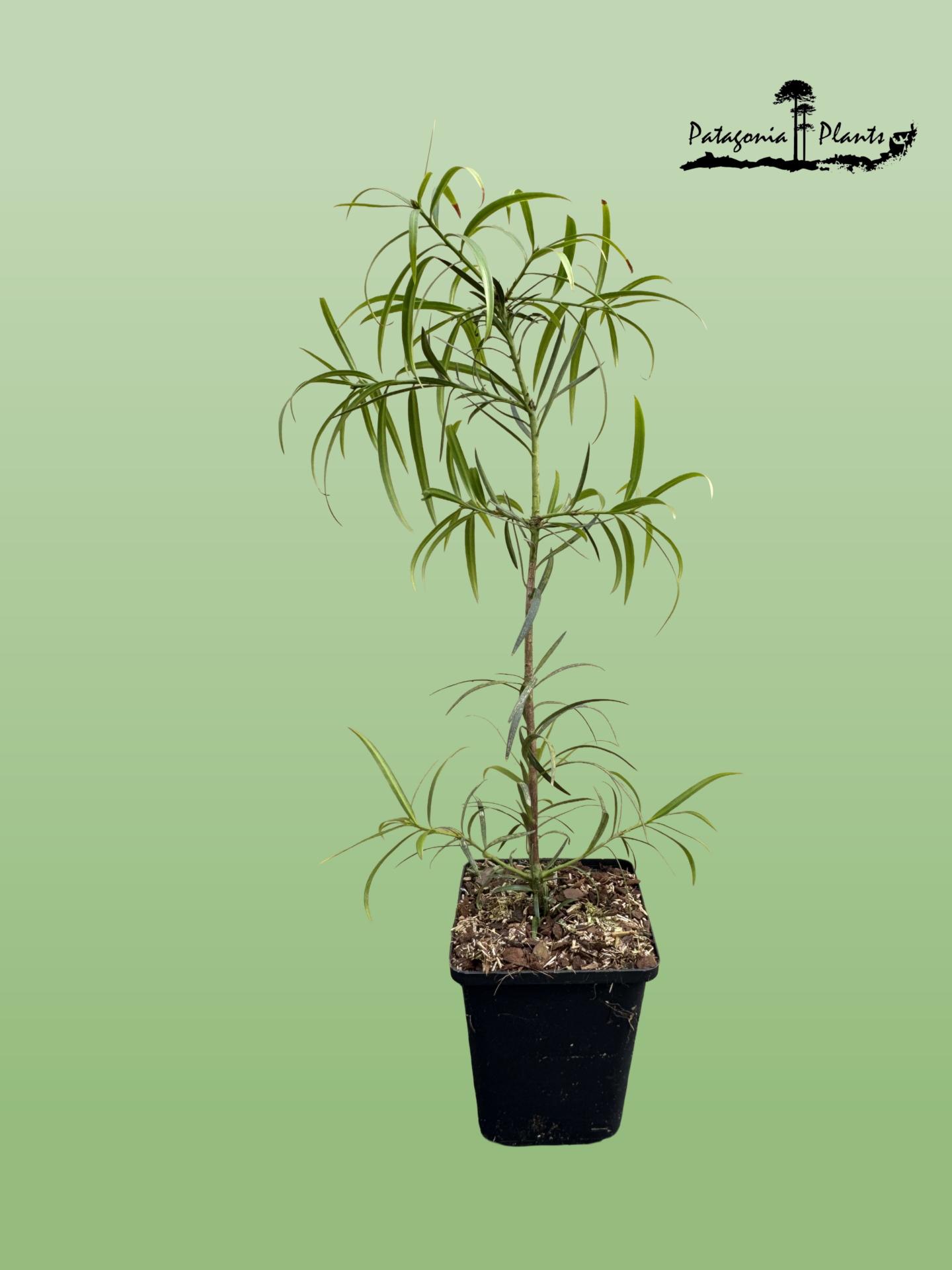


Podocarpus salignus, commonly known as willow-leaf podocarp or mañío de hojas largas, is an elegant evergreen conifer endemic to Chile. Its long, narrow, arching leaves give it an unusually soft and almost broadleaf appearance for a conifer. Naturally occurring in moist forests, river valleys and sheltered Andean ravines, it develops into a graceful medium to large tree. Female plants produce attractive fleshy red to violet seed structures when a male pollinator is nearby.
- Common name: Willow-leaf podocarp, Mañío de hojas largas, Mañiú.
- Hardiness: approximately -10 °C. is a reasonable guide for established plants in a sheltered position.
- Maximum height: approximately 20 m in its natural habitat; cultivated specimens are often smaller.
- Flowers / fruit: Produces cones / fleshy seed structures rather than true flowers or fruits. Male trees produce pollen cones, while female trees develop seeds on fleshy red to violet receptacles when pollinated.
- Type: Tree · Conifer · Evergreen.
- Soil: prefers moist but well-drained soil, particularly in humid or high-rainfall conditions. In nature it frequently occurs on soils derived from siliceous rock and in moist ravines and riparian forests. It tolerates a range of soil textures and pH levels provided adequate moisture and drainage are available.
Picture of mature speciment by Daderot – Own work, CC0, https://commons.wikimedia.org/w/index.php?curid=57815849
Related products


Native Chilean plants


Native Chilean plants


Native Chilean plants

Native Chilean plants


Native Chilean plants


Native Chilean plants


Native Chilean plants


Native Chilean plants